About Luis Fernando Canal
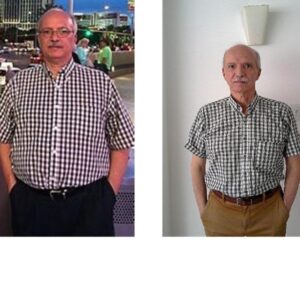
Luis Fernando Canal is the author of Water, Body, and Dignity in the Second Half of Life, an autobiographical account of measurable change, clarity, and regained autonomy after the age of 67.
He is not a physician, nor does he present himself as one. His contribution is different: a disciplined, real-world observation of what occurred when long-standing assumptions about the body were reconsidered with consistency and restraint.
Professional Background
Before writing this book, Luis Fernando Canal spent decades in senior roles across law, finance, and public service, working in high-responsibility environments that demanded judgment, structure, and long-term thinking.
That background informs the tone of this work: not speculative, not promotional, but analytical and grounded in lived experience.
The Turning Point
After the age of 67, he encountered what many accept as inevitable: gradual weight gain, reduced energy, and declining mental clarity.
Multiple conventional approaches produced partial and unstable results.
The lasting change did not come from intensity or extremes, but from a quieter question:
What role does the body’s internal environment—beginning with water—play in daily function, metabolism, and clarity?
What Changed
Over a three-year period, the following outcomes were observed:
- Approximately 14% reduction in body weight between ages 67–68, without extreme calorie restriction
- Additional 4% to 5% reduction and improved metabolic stability between ages 68–70
- Smoother skin
- More stable daily energy
- Noticeable recovery of mental clarity
These changes were not presented as universal results, but as documented personal outcomes.
Evidence of Change
Two elements reinforce the credibility of this account:
- Testimony from his three sons, who directly observed the physical and cognitive changes over time
- Full transparency regarding his health, including the placement of three heart stents in December 2025
These facts are not presented to dramatize the story, but to clarify its context:
this is not a narrative of perfection, but one of attention, discipline, and honesty.
A Different Kind of Book
This work does not offer:
- a protocol
- a quick solution
- a promise of identical outcomes
Instead, it provides:
- A precise autobiographical account
- Careful reflection on what changed and what remains uncertain
- A framework for thinking, not a set of instructions
A Responsible Position
Luis Fernando Canal discussed his observations with physicians, who agreed that attention to hydration can be beneficial within a broader context of health.
However, this book is not medical advice.
It is an observational record intended to inform and encourage thoughtful inquiry, not to replace professional care or prescribe treatment.
Why This Work Exists
Many approaches to health are built on promises.
This one is built on evidence, limits, and clarity.
Its value lies in what it does not do: it does not exaggerate, generalize, or attempt to convince.
It presents a lived process with enough precision and honesty that the reader can decide its relevance independently.
The Book
Water, Body, and Dignity in the Second Half of Life is a serious account of change in later life—focused not on appearance, but on function:
- the ability to think clearly
- the ability to move
- the ability to remain autonomous
It is written with restraint, respect for the reader, and a commitment to truth over persuasion.
I Want More Information Before Purchasing Click Here
Copyright © Luis Fernando Canal